
Induction bonding machines
PLC controlled rotary machines for heat-activated bonding under controlled temperature and time.
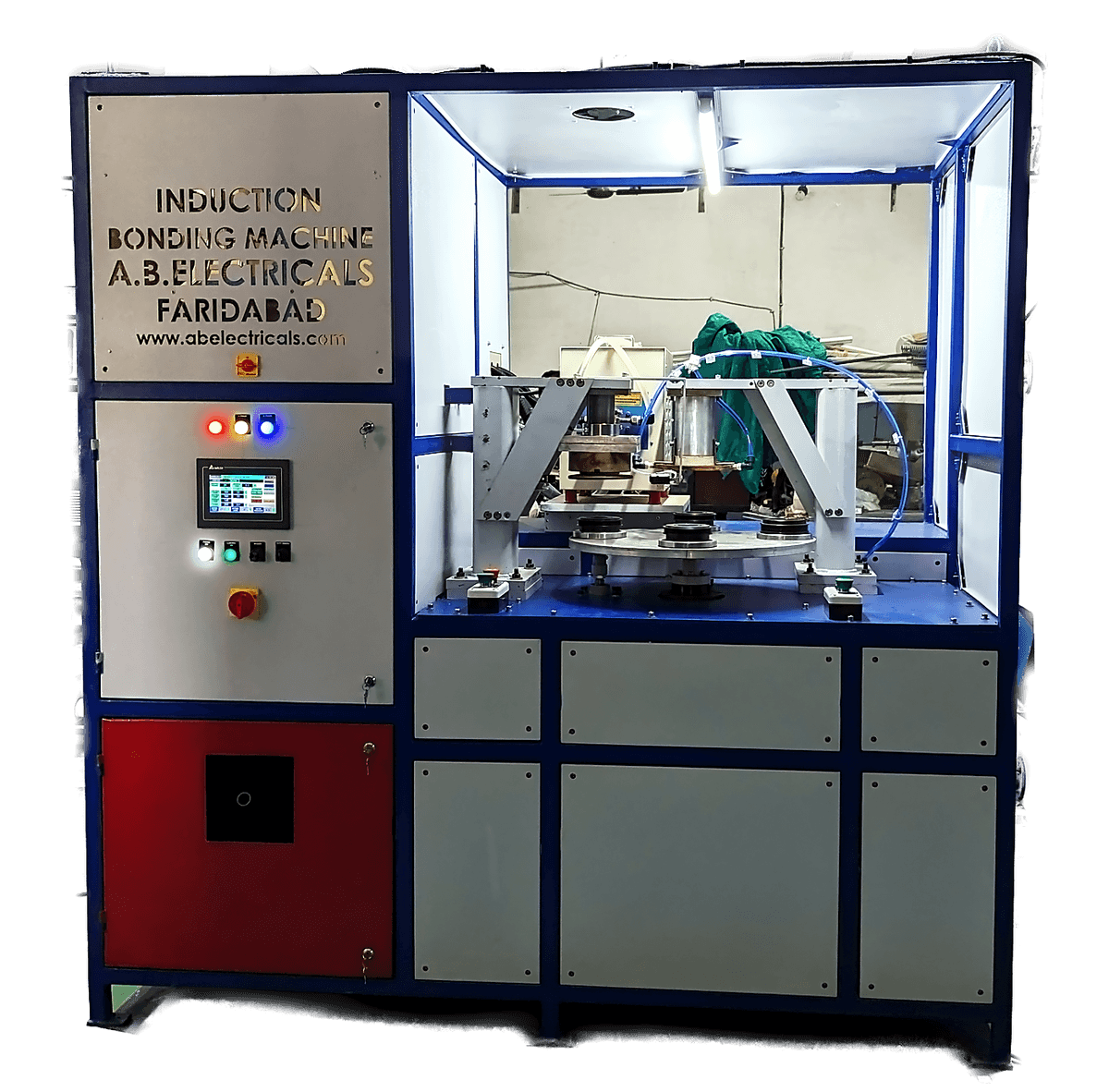
Bonding uses heat to activate an adhesive or a bonding layer between two components, holding them under pressure while the bond forms. The process is controlled by temperature and by time, and both have to be repeatable or the bond strength is not.
Induction suits it because the heat can be put into the metal part of the assembly directly, so the bonding layer is heated through the component rather than by hot air around it. The cycle is short, the surroundings stay cool, and the same energy goes in every time.
We build PLC controlled rotary induction bonding machines, with parts indexing through loading, heating, dwell and unloading positions. We also provide manual bonding systems where those better suit your production needs. Both run on the induction heating power supplies listed below.
Technical specifications
- ConfigurationRotary indexing table, PLC controlled
- Process controlTemperature and time based
We confirm the final configuration against your component, material and production requirements.
Questions engineers ask
How is bonding different from brazing?
Brazing joins metal to metal with a molten metal filler above 450 degrees Celsius. Bonding uses an adhesive or polymer layer activated at much lower temperature. Both need precise, repeatable heat, which is why both are done well by induction.
Related processes
Tell us about the part.
Send a drawing, the material, the case depth or temperature you need, and your production rate. Our engineers will help define the right machine for your process.