
Inductor and coil design
An induction machine without the right coil is a power supply with nowhere to put its energy. The inductor is the tooling, and it is what decides whether the result is uniform.
What the coil actually controls
Two machines with identical power supplies and identical frequency settings will produce different parts if their coils differ. The coil determines four things, and each of them can ruin a result on its own.
Where the field goes. Current flows in the coil, the field follows the coil, and the heat follows the field. Shape the coil to the feature and the heat lands on the feature. This is the entire basis of selective hardening.
How tightly it couples. Coupling efficiency falls off sharply with the gap between coil and workpiece. A millimetre of extra clearance costs real power, which is why inductors are built to close tolerances around the component and why a coil for a 50 mm shaft will not do a competent job on a 55 mm one.
How uniform the heating is. Turn spacing, turn count and the position of the connection leads all affect the field distribution along the heated length. Corners, edges and small diameters concentrate current and run hotter than flat surfaces, which has to be designed around rather than discovered on the first batch.
How the quench arrives. On hardening work the quench arrangement is usually part of the same assembly, and where the spray lands relative to where the heat was determines the case as much as the heating does.
Water cooling is not optional
Coils are made from copper tube, not solid bar, because demineralised water runs through them. Copper is a poor place for eddy currents to dissipate and the coil is not meant to get hot, but it carries very large currents and it sits next to a workpiece at austenitising temperature. Without internal cooling it would anneal, soften and lose its shape, and a coil that has lost its shape has lost its coupling.
Why coils are quoted with the machine
A coil is component-specific tooling in exactly the way a press die is. Change the part and you need a new one. This is the single most common surprise for a buyer used to general-purpose equipment, and it is worth understanding before you compare quotations: a machine price that does not mention tooling is not a complete price.
It is also why the useful first question from a supplier is "what is the part?" rather than "what power do you want?".
Inductors built at the Faridabad works
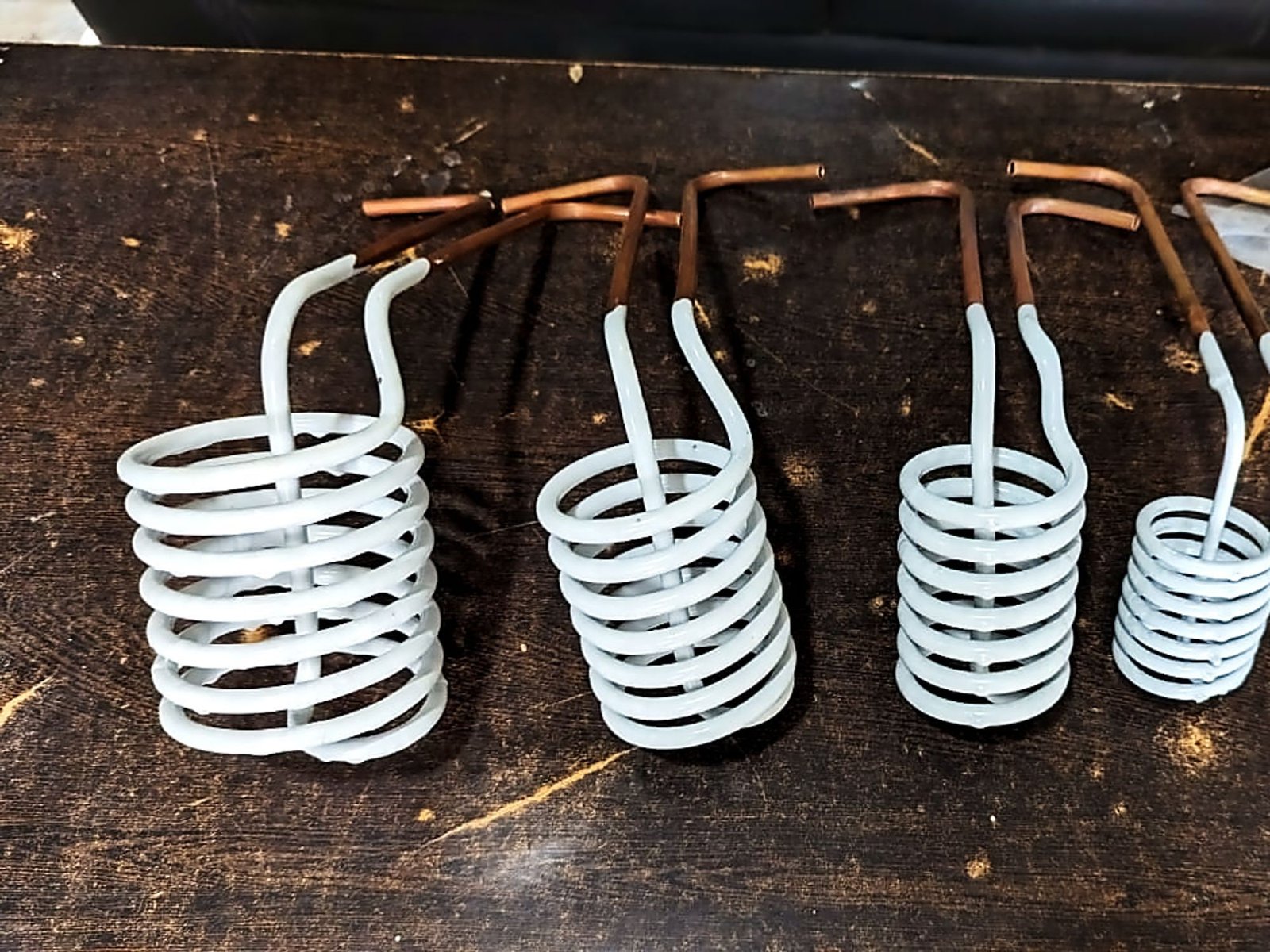
Multi-turn helical coils. Turn count and pitch set the heated length and the field uniformity along it. 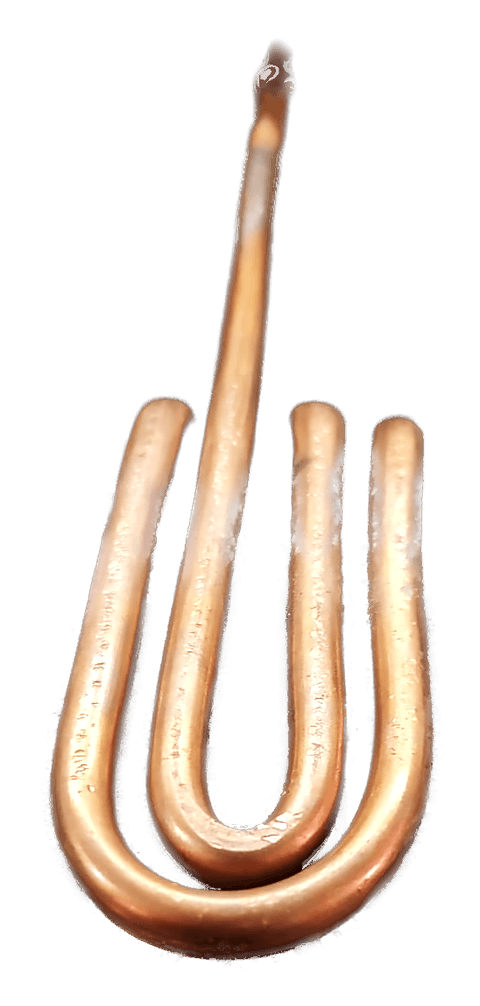
A hairpin inductor. Used where the heated zone is a face or an edge rather than a circumference. 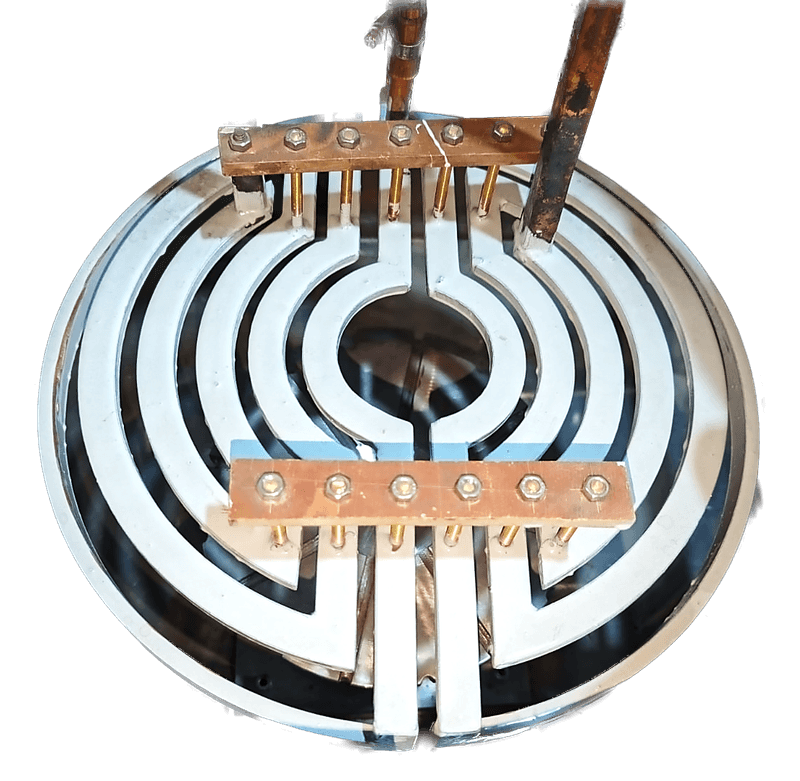
A pancake inductor. Heats a flat face, with turn spacing controlling the radial distribution. 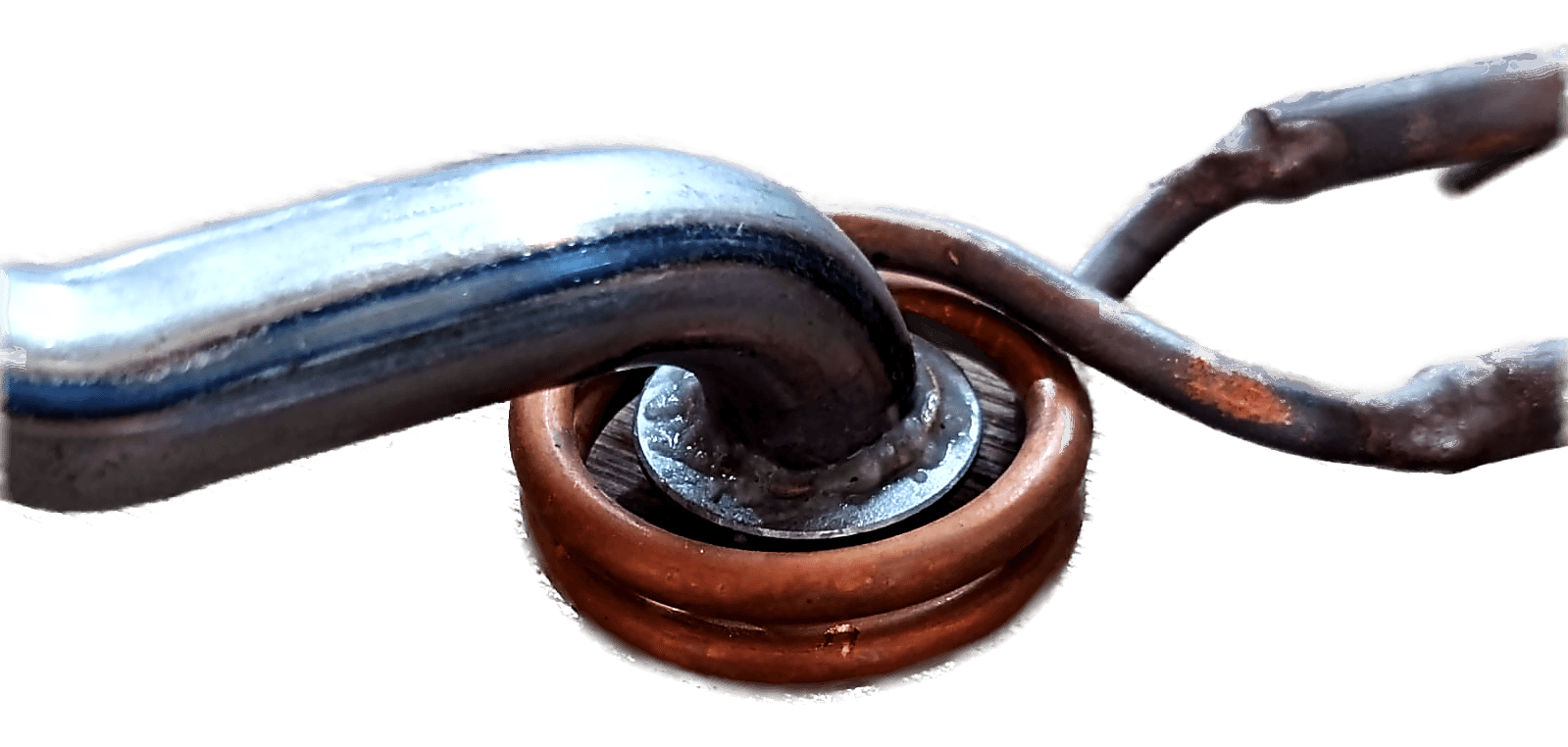
A small single-turn coil, close-coupled to the bar. Coupling distance is what makes it efficient. 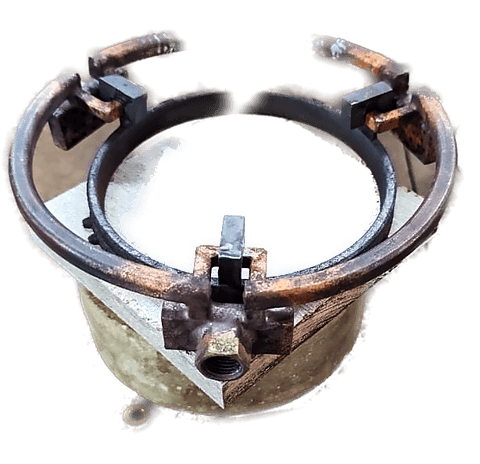
Coil, clamps and workpiece location as one assembly. The coil alone is not the tooling. 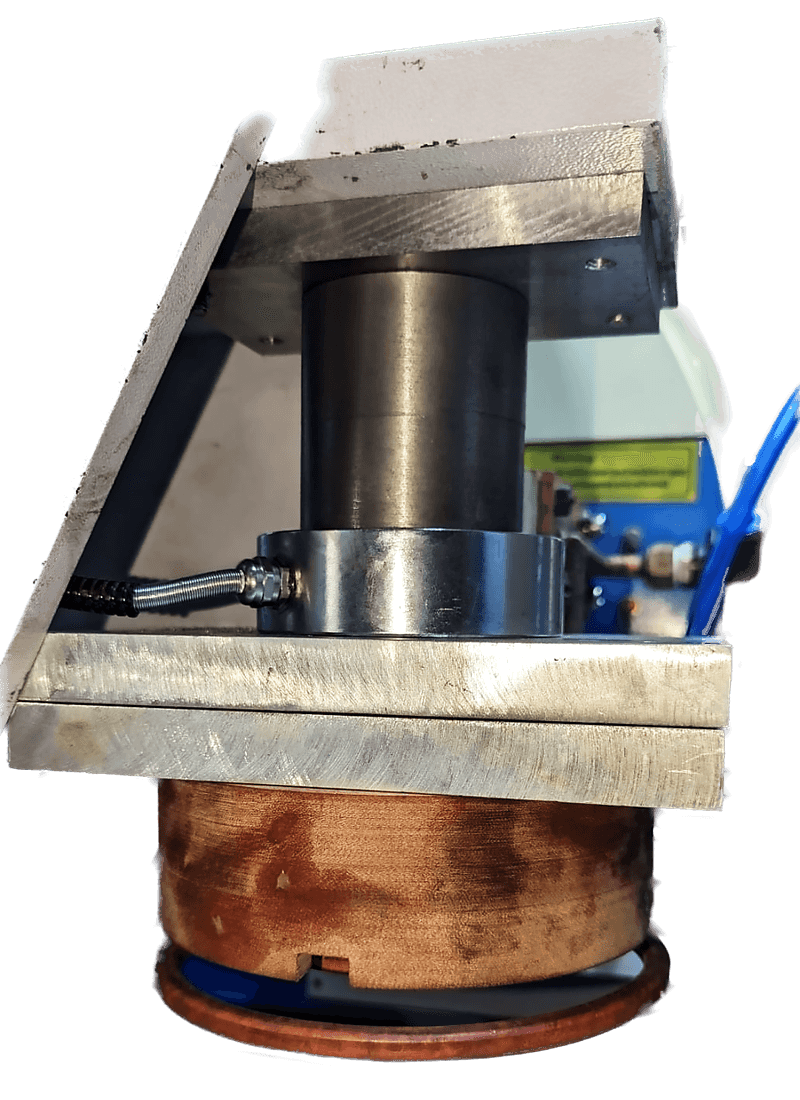
A ring inductor built into a station, for heating around a circumference. 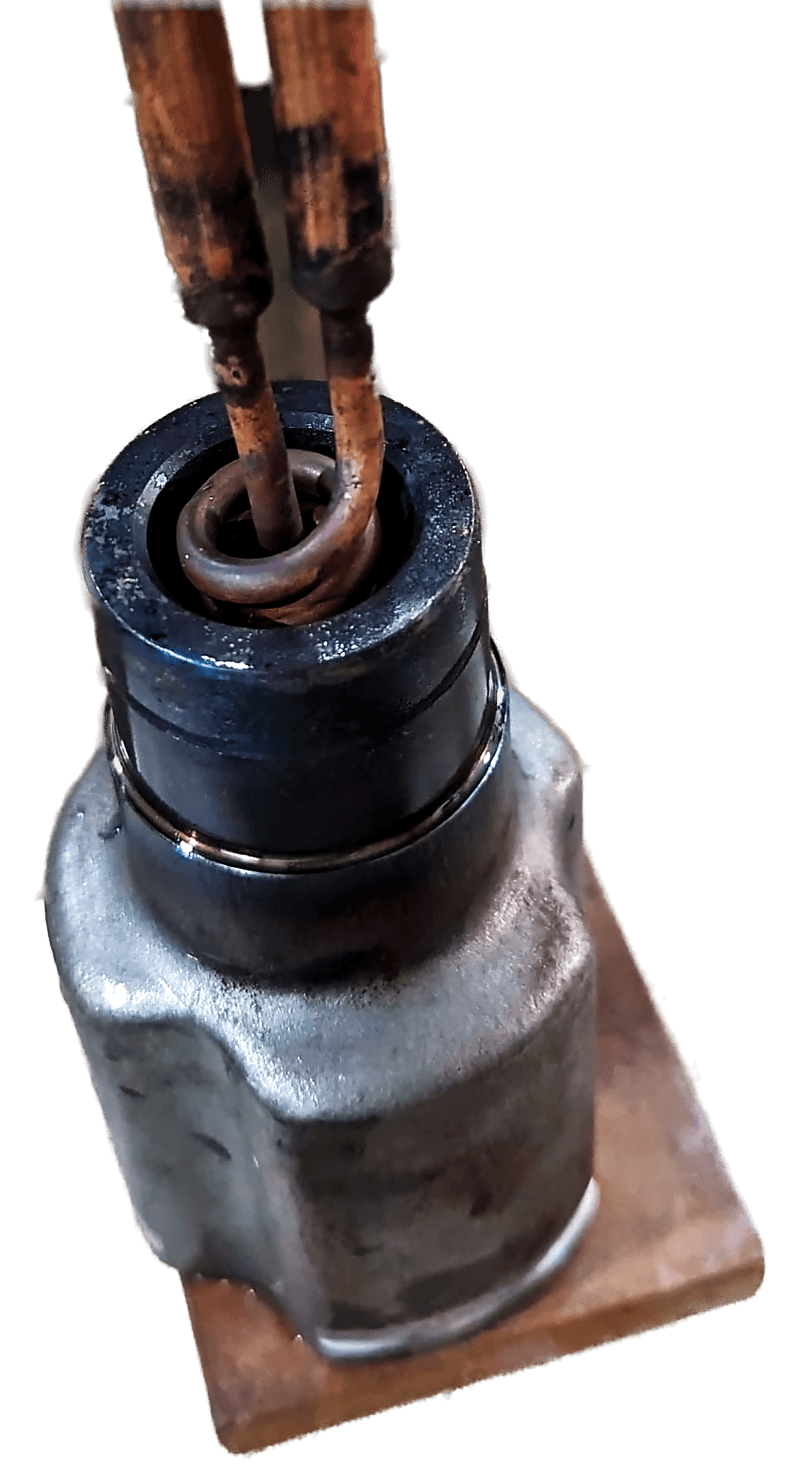
An encircling coil for a cylindrical part. The simplest geometry and the most efficient. 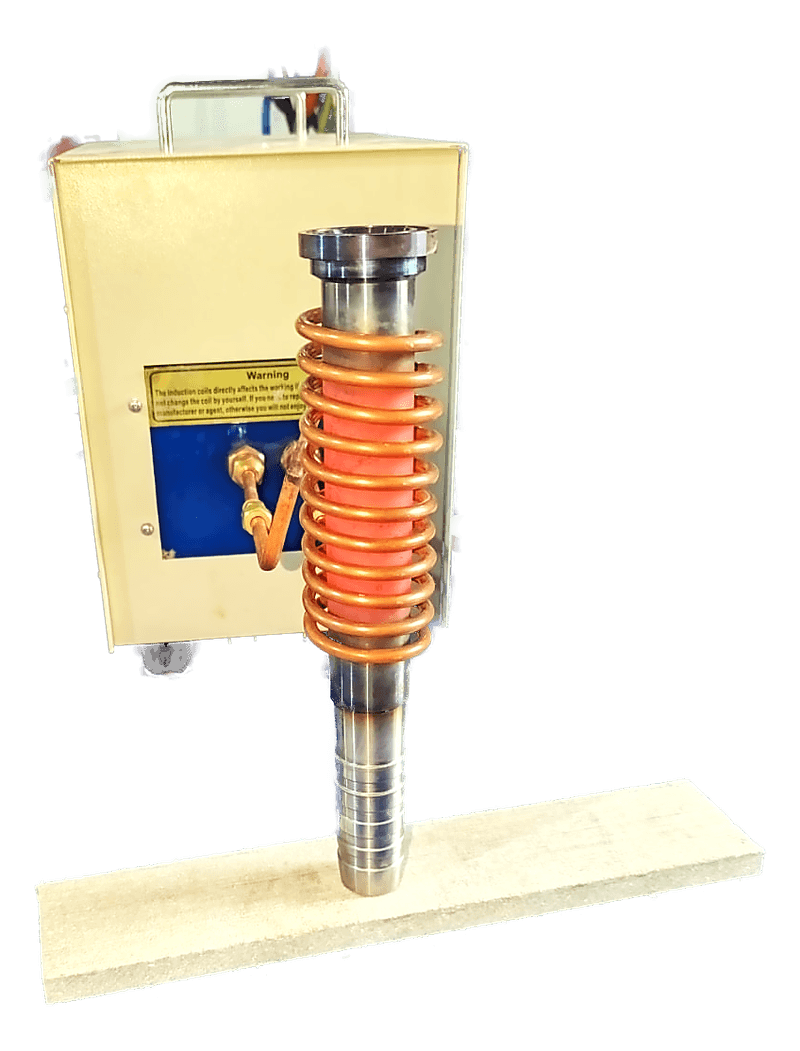
Refractory packing between turns, where the coil sits close to radiant heat from the workpiece.
Related processes
Send the part, get the coil concept.
A drawing and a description of what has to be hard, and what has to stay soft, is enough to start. Coil design is where the engineering happens and it is where the conversation should begin.